Tools and Templates
LATEST MATERIAL
Introduce Resources and Training Gateway on CONNECT
Here you can access tools, resources and training across CONNECT to help with every step of your health professional capacity building.
Emotional needs of patients: This handbook explains how a brain infection may affect the emotional state of a patient. It aims to support patients and their carers on their physical and mental journey to recovery.
This illustrated story aims to help relatives understand that they can play an extremely important role for the recovery of patient’s health.
Supporting caregivers within hospital
This IASC illustrated guide builds basic psychosocial skills for COVID-19 essential workers. Based on a global survey across 24 countries, it offers practical ways to enhance well-being and integrate mental health support into daily responses. Access it in multiple languages here.
This IASC illustrated guide builds basic psychosocial skills for COVID-19 essential workers. Based on a global survey across 24 countries, it offers practical ways to enhance well-being and integrate mental health support into daily responses.
Khám phá nguồn tài liệu và tập huấn bằng tiếng Việt
Các tài liệu và tập huấn do phòng Kết nối Khoa học với Công chúng và Cộng đồng thuộc Đơn vị Nghiên cứu Lâm sàng Đại học Oxford đã biên tập và chia sẻ và tổ chức.
Ngoài ra, CONNECT còn là cầu nối để nhân viên y tế có thể chia sẻ những khó khăn, suy ngẫm và chuyên môn và cuộc sống.
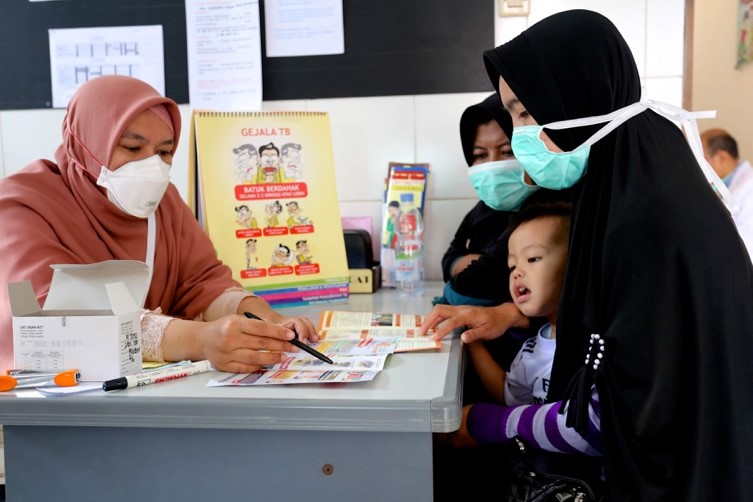
Health Information for Patients
Credit: Pearl Gan
Patient support
Beyond the Hospital (OUCRU)
Emotional needs of patients: This handbook explains how a brain infection may affect the emotional state of a patient. It aims to support patients and their carers on their physical and mental journey to recovery.
English | Vietnamese pdf
A patient’s story
This illustrated story aims to help relatives understand that they can play an extremely important role for the recovery of patient’s health.
English| Vietnamese pdf
Supporting caregivers within hospital
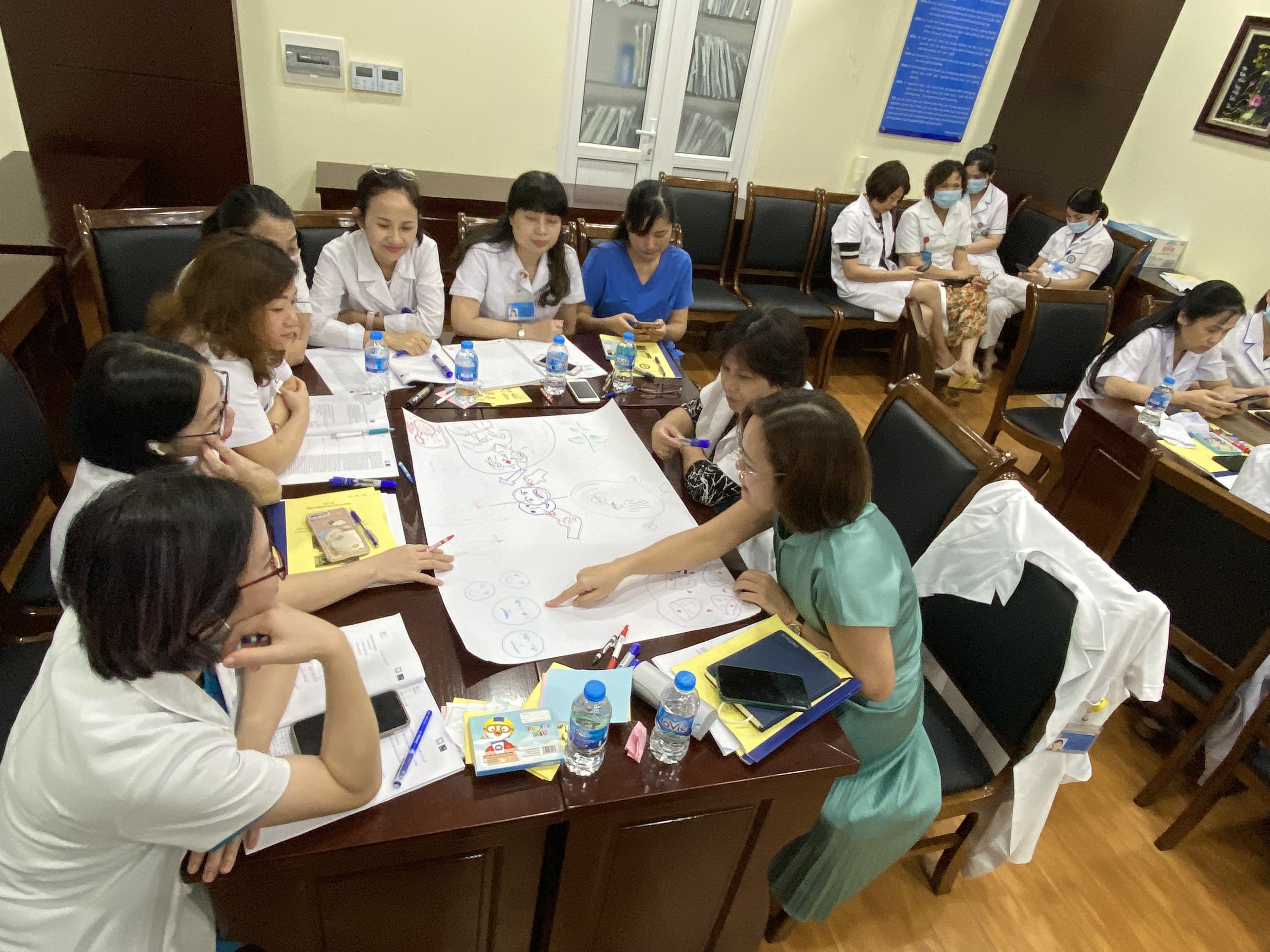
These two documents emerging from a research and engagement project identifying elements of stress and anxiety amongst caregivers at the Hospital for Tropical Diseases, Vietnam, provide a guide to practical and engaging activities which can support these individuals during the period of the patient hospitalization.
Engagement addressing caregiver stress English pdf | Vietnamese pdf
Art therapy English pdf | Vietnamese pdf
Pandemics and epidemics
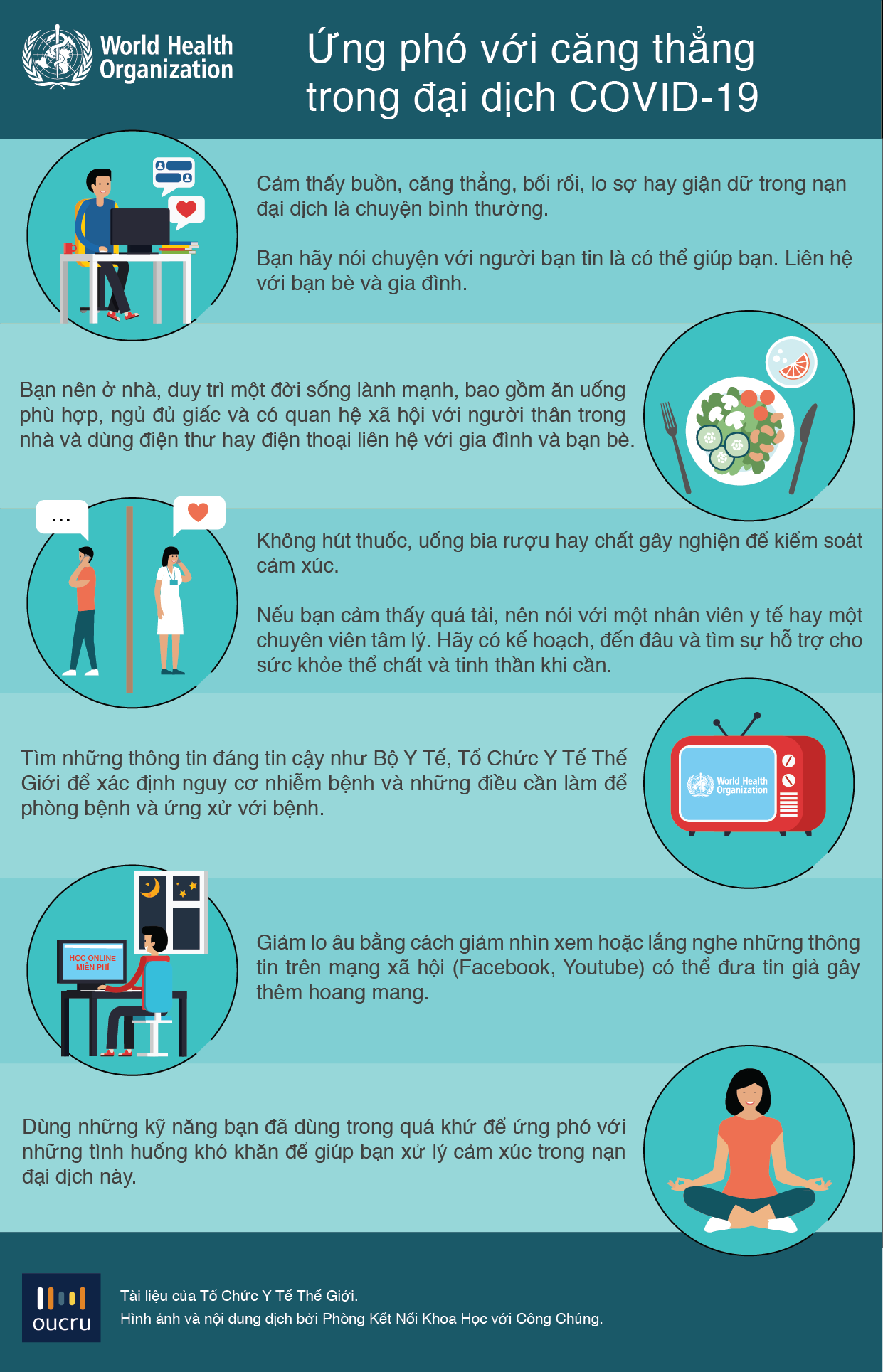
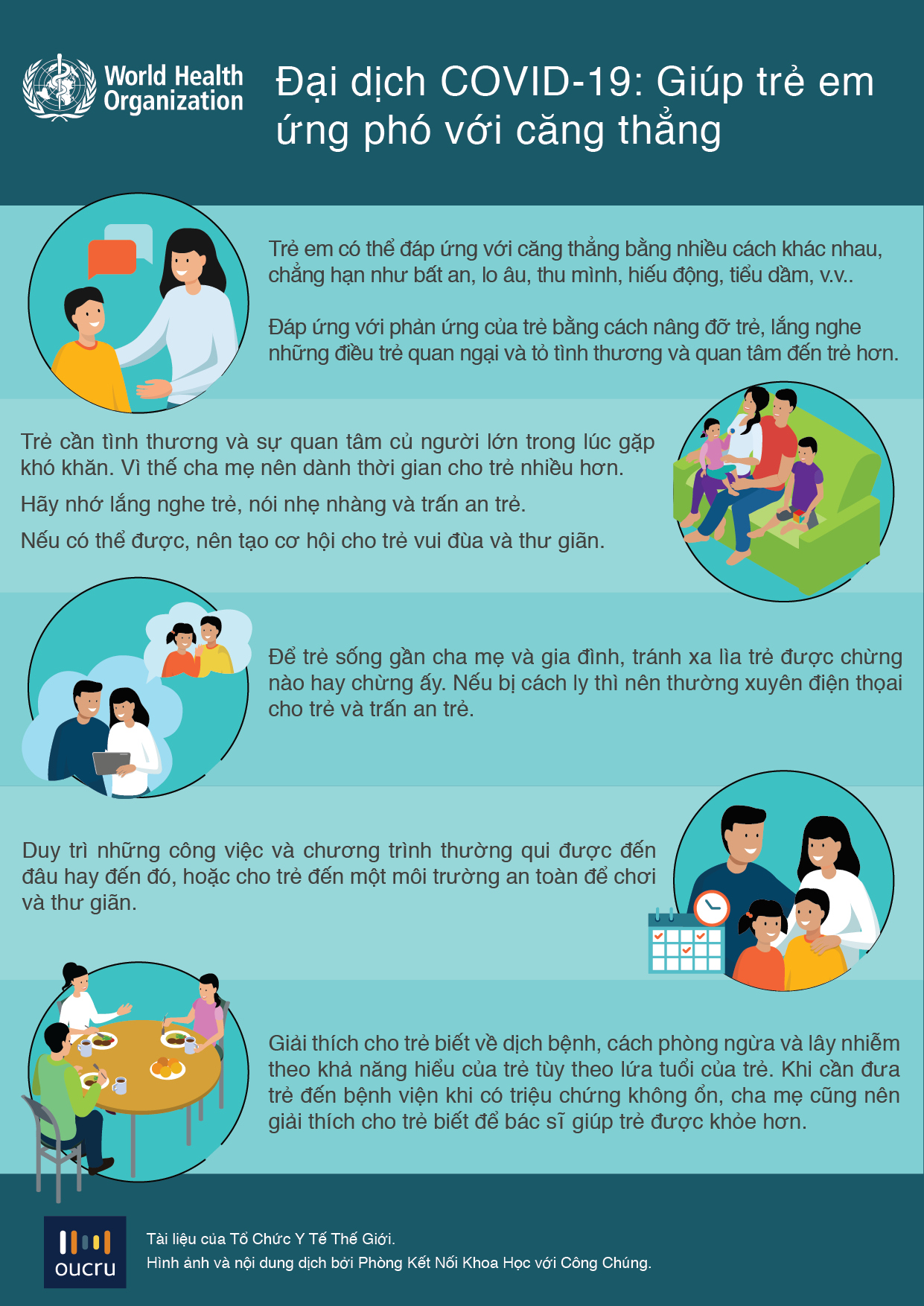
These colourful and accessible poster resources developed by the World Health Organization are a guide to managing stress during the Covid-19 outbreak.
Coping with stress during the Covid-19 outbreak (Adults)
English pdf | Vietnamese pdf
Coping with stress during the Covid-19 outbreak (Children)
English pdf | Vietnamese pdf
Basic Psychosocial Skills-A Guide for Covid-19 Responders
This illustrated guide, developed by the Inter-Agency Standing Committee Reference Group on Mental Health and Psychosocial Support in Emergency Settings, aims at building basic psychosocial skills among all essential workers responding to COVID-19. Around 200 COVID-19 survivors as well as COVID-19 emergency responders in 24 countries participated in a survey, a consultation and the piloting of this document. The guide has been translated into different languages, see here to access this resource in the available languages. The guide assists with how to integrate psychosocial support into daily COVID-19 responses and how to make a difference in the well-being of people you communicate with during the COVID-19 pandemic.
English pdf l Vietnamese pdf | Burmese pdf
COVID-19 Health responses: KEMRI l WELLCOME TRUST - Policy Brief (December 2020) [PDF here]
Research
 |
|
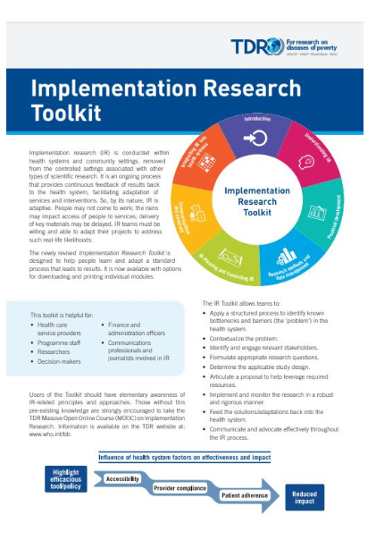
Implementation research toolkit
|
|
This toolkit provides deeper learning on implementation research, helping people learn a standard process that can lead to results that can be compared across regions and countries. It is designed to help identify system bottlenecks and the stakeholders to be involved in the process, formulate appropriate research questions, conduct the research and develop a plan for implementing the study results.
Launched in 2014, it has been revised to incorporate recommendations by researchers, health administrators, communications specialists and others who have utilized the Toolkit. It also incorporates new learning about the critical role of IR in the effective introduction of new policies, strategies and health technologies within health systems.
The revised version of the Implementation research toolkit is now available online in a self-learning format and may be used by individuals or research teams. It is divided into seven nonlinear modules which may be completed sequentially or with a focus on specific modules. Modules include topics such as: Understanding IR, Integrating IR into the health system, and IR-related communications and advocacy.
Access the TDR Implementation Research Toolkit (2nd edition) here.
The accompanying workbook can be accessed here.
|